

As a supplier of Film Faced Plywood, I often get asked about how our product performs in various environmental conditions. One question that comes up quite frequently is about its performance in low - temperature environments. In this blog, I'll delve into the details of how Film Faced Plywood behaves when faced with cold temperatures.
Physical Properties of Film Faced Plywood in Low Temperatures
Film Faced Plywood consists of a plywood core covered with a thin film, which can be made of different materials such as phenolic resin. At low temperatures, the physical properties of both the plywood core and the film coating change.
Plywood Core
The plywood core is typically made of multiple layers of wood veneers glued together. Wood is a natural material, and its properties are affected by temperature and humidity. In low - temperature environments, the moisture content in the wood can freeze. When water freezes, it expands, which can potentially cause internal stresses within the plywood. If the plywood has a high moisture content before being exposed to low temperatures, these internal stresses can lead to cracking or delamination of the veneer layers.
However, our Film Faced Plywood is carefully manufactured to have a low and stable moisture content. We use advanced drying techniques during the production process to ensure that the moisture content of the plywood core is within an optimal range. This significantly reduces the risk of damage caused by freezing water in low - temperature conditions.

Film Coating
The film coating on the plywood plays a crucial role in protecting the core and enhancing the overall performance of the product. At low temperatures, the film becomes more brittle. A brittle film is more prone to cracking when subjected to mechanical stress. For example, if the Film Faced Plywood is bent or struck during handling in a cold environment, the film may crack.
To address this issue, we use high - quality film materials with good low - temperature flexibility. Our research and development team has conducted extensive tests to select films that can maintain a certain degree of flexibility even at very low temperatures. This helps to prevent the film from cracking and ensures that the protective function of the film is maintained.

Mechanical Performance in Low Temperatures
Strength
The strength of Film Faced Plywood is an important consideration, especially in construction applications. In low - temperature environments, the strength of the plywood may change. Generally, the compressive strength of wood tends to increase slightly at low temperatures. This is because the wood fibers become more rigid, which can resist compression better.

However, the shear strength of the plywood may be affected. The glue used to bond the veneer layers may become less effective at low temperatures. If the glue joint is not strong enough, the plywood may fail under shear stress. Our Film Faced Plywood uses high - performance adhesives that are designed to maintain their bonding strength in a wide range of temperatures, including low - temperature conditions. Through strict quality control and testing, we ensure that our plywood meets the required strength standards even in cold environments.
Durability
Durability is another key aspect of Film Faced Plywood performance. In low - temperature environments, the durability of the plywood can be challenged by factors such as repeated freezing and thawing cycles. These cycles can cause the wood to expand and contract, which may lead to fatigue and damage over time.
The film coating on our Film Faced Plywood provides an additional layer of protection against moisture penetration. By preventing water from entering the plywood core, it reduces the risk of damage caused by freezing and thawing. Additionally, the film helps to resist abrasion and chemical corrosion, which further enhances the durability of the plywood in low - temperature environments.
Applications in Low - Temperature Construction
Film Faced Plywood is widely used in construction, and its performance in low - temperature environments is crucial for many projects. In cold regions, such as northern countries or high - altitude areas, construction activities often take place in cold weather.
Formwork
One of the main applications of Film Faced Plywood is as formwork for concrete construction. In low - temperature environments, the formwork needs to be able to withstand the pressure of the fresh concrete and the weight of the construction equipment. Our Film Faced Plywood's stable physical and mechanical properties ensure that it can perform well as formwork even in cold weather. The smooth surface of the film coating also helps to produce a high - quality concrete finish.
Structural Components
In some cases, Film Faced Plywood may be used as structural components in low - temperature buildings. For example, it can be used as wall panels or roof sheathing. The strength and durability of our plywood make it a reliable choice for these applications. It can resist the forces exerted by wind, snow, and other environmental factors in cold climates.
Comparison with Other Materials
When considering materials for low - temperature construction, it's important to compare Film Faced Plywood with other options.
Steel
Steel is a commonly used material in construction. While steel has high strength and is relatively unaffected by temperature changes in terms of its basic properties, it is prone to corrosion in the presence of moisture. In low - temperature environments, where condensation can occur, steel may require additional protective coatings to prevent rusting. Film Faced Plywood, on the other hand, has a natural resistance to moisture when properly coated, and it does not corrode.
Traditional Plywood
Traditional plywood without a film coating is more vulnerable to damage in low - temperature environments. The lack of a protective film makes it easier for moisture to penetrate the wood, leading to problems such as swelling, cracking, and decay. Our Film Faced Plywood provides a much higher level of protection and performance compared to traditional plywood.
Tips for Using Film Faced Plywood in Low - Temperature Environments
Storage
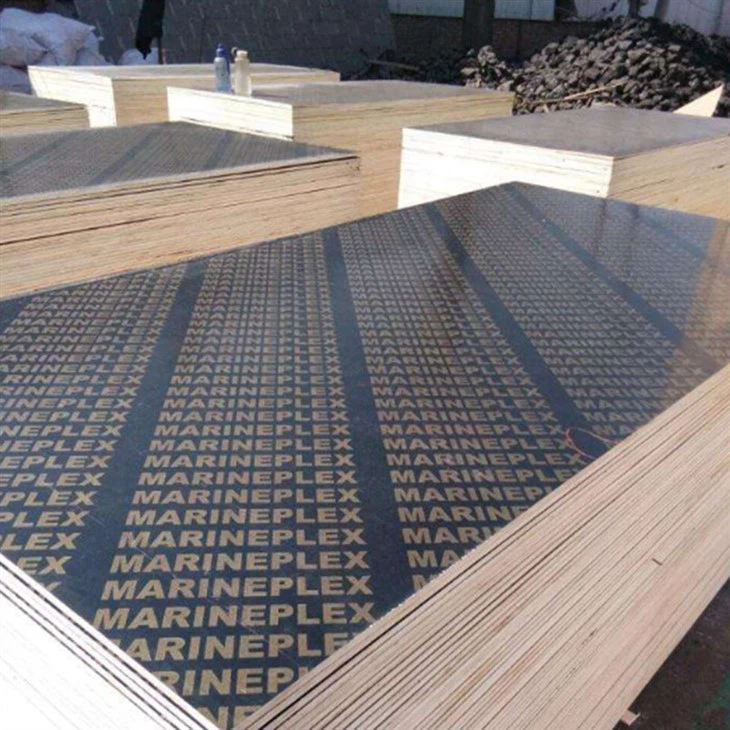
Proper storage is essential to ensure the performance of Film Faced Plywood in low - temperature environments. The plywood should be stored in a dry and well - ventilated area. If possible, it should be covered to prevent snow or ice from accumulating on it. Before using the plywood, it should be allowed to reach the ambient temperature of the construction site to minimize the risk of thermal shock.
Handling
When handling Film Faced Plywood in cold weather, care should be taken to avoid excessive bending or impact. The brittle film may crack if the plywood is mishandled. Workers should use appropriate tools and techniques to ensure that the plywood is installed correctly without causing damage.
Conclusion
In conclusion, Film Faced Plywood can perform well in low - temperature environments when it is properly manufactured and used. Our company, as a supplier, is committed to providing high - quality Film Faced Plywood that can meet the challenges of cold climates. We offer a variety of products, including Black Film Plywood, Film Coated Plywood, and Brown Film Faced Plywood, all of which are designed to provide excellent performance in different applications.
If you are interested in purchasing Film Faced Plywood for your project, especially in low - temperature environments, please feel free to contact us for more information and to discuss your specific requirements. We look forward to partnering with you to ensure the success of your construction projects.
References
- Forest Products Laboratory. "Wood Handbook: Wood as an Engineering Material." United States Department of Agriculture, 2010.
- ASTM International. "Standards for Plywood and Related Products." ASTM International, various years.