

Hey there! I'm a supplier of Pine Film Faced Plywood, and I often get asked about how this amazing product resists moisture. Well, let's dive right into it.
First off, what is Pine Film Faced Plywood? It's a type of plywood that has a special film on its surface. This film plays a crucial role in protecting the plywood from moisture. There are different colors of film faced plywood available, like Brown Film Faced Plywood, White Film Faced Plywood, and Black Film Plywood. Each has its own unique look and application, but they all share the common feature of moisture resistance.
The Role of the Film
The film on Pine Film Faced Plywood acts as a barrier. It's made from materials that are impermeable to water. When water comes into contact with the surface of the plywood, the film prevents it from seeping into the wood. This is super important because once water gets into the wood, it can cause all sorts of problems.
For example, water can cause the wood to swell. When the wood swells, it can warp and lose its shape. This is a big no - no, especially in construction where the plywood needs to be flat and stable. The film also protects the wood from rot. Rot is caused by fungi that thrive in moist environments. By keeping the water out, the film reduces the chances of the wood being attacked by these fungi.
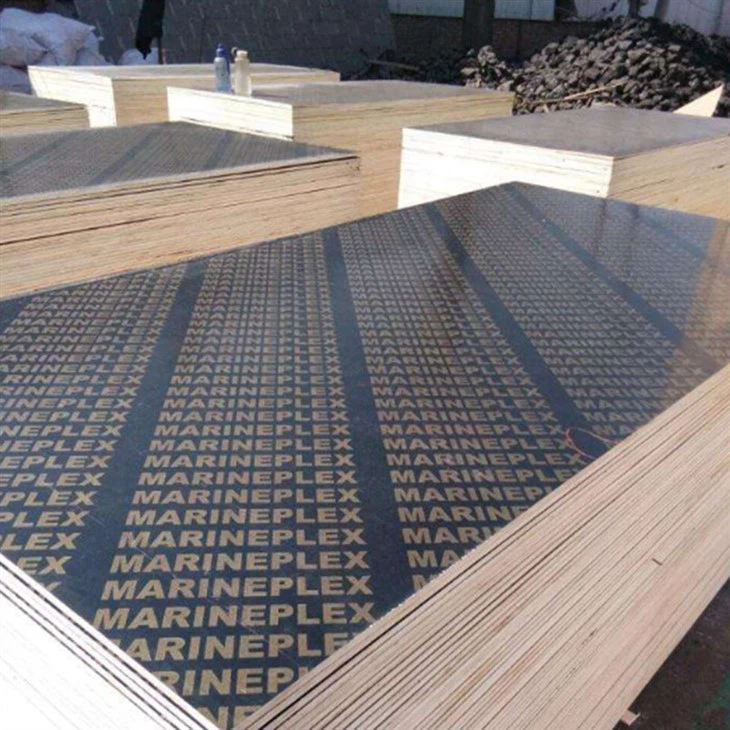

The film is applied to the plywood under high pressure and temperature during the manufacturing process. This ensures that the film adheres tightly to the wood surface, creating a seamless and durable barrier. It's like a shield that stands between the wood and the moisture.
The Quality of the Pine Wood
The type of pine wood used in the plywood also contributes to its moisture resistance. Pine is a softwood, but not all pine is created equal. The pine we use in our Pine Film Faced Plywood is carefully selected. It has a relatively low moisture content to begin with.
Before the plywood is made, the pine logs are dried to a specific moisture level. This pre - drying process reduces the amount of water that could potentially be in the wood. Additionally, the pine has a natural structure that makes it somewhat resistant to water penetration. The cell walls of the pine wood are dense enough to slow down the movement of water through the wood.
The layers of pine veneers in the plywood are also glued together with special adhesives. These adhesives are waterproof. They not only hold the layers of the plywood together but also create an extra layer of protection against moisture. The adhesives fill in the gaps between the veneers, preventing water from seeping through the joints.
How the Plywood is Constructed
The construction of the plywood itself is another factor. Our Pine Film Faced Plywood is made with multiple layers of pine veneers. These layers are arranged in a cross - grain pattern. This cross - grain construction makes the plywood stronger and more resistant to moisture.
When water tries to penetrate the plywood, the cross - grain pattern makes it more difficult for the water to move through the wood. The water has to navigate through the different layers at different angles, which slows down its progress. It's like a maze for the water molecules.
In addition, the edges of the plywood are often sealed. Sealing the edges is an important step because the edges are more vulnerable to water entry. A special edge - sealing compound is applied to prevent water from getting in through the sides of the plywood.
Testing and Certification
We take the moisture resistance of our Pine Film Faced Plywood very seriously. That's why we conduct a series of tests to ensure that it meets high standards. We test the plywood by exposing it to different levels of moisture and observing how it performs.
We also have our products certified by independent testing agencies. These certifications are a guarantee that our plywood meets industry standards for moisture resistance. When you buy our Pine Film Faced Plywood, you can be confident that it will stand up to the elements and keep its quality over time.
Applications in Moist Environments
Our Pine Film Faced Plywood is widely used in construction projects where moisture is a concern. For example, it's commonly used in concrete formwork. In concrete formwork, the plywood is in direct contact with wet concrete. If the plywood isn't moisture - resistant, it can get damaged by the water in the concrete.
Our Pine Film Faced Plywood can withstand the wet conditions during the concrete pouring and curing process. It remains in good condition and can be reused multiple times, which is cost - effective for construction companies.
It's also used in outdoor structures like sheds and decks. In these applications, the plywood is exposed to rain, snow, and humidity. The moisture resistance of the Pine Film Faced Plywood ensures that these structures last longer and look good.
Maintaining the Moisture Resistance
While our Pine Film Faced Plywood is highly moisture - resistant, there are still some things you can do to maintain its performance. After installation, it's a good idea to inspect the surface of the plywood regularly. If you notice any damage to the film, such as scratches or tears, you should repair it as soon as possible.
You can use a special film - repair kit to patch up the damaged areas. This will restore the integrity of the moisture - resistant barrier. Also, keep the plywood clean. Dirt and debris can trap moisture on the surface, increasing the risk of water penetration.
Conclusion
So, there you have it. Pine Film Faced Plywood resists moisture through a combination of factors. The impermeable film on the surface, the quality of the pine wood, the construction of the plywood, and the proper maintenance all work together to keep the water out and the wood in good condition.
If you're in the market for high - quality, moisture - resistant Pine Film Faced Plywood for your construction or other projects, don't hesitate to reach out. We're here to provide you with the best products and answer any questions you might have. Whether you need Brown Film Faced Plywood, White Film Faced Plywood, or Black Film Plywood, we've got you covered. Contact us today to start a purchase negotiation and see how our Pine Film Faced Plywood can meet your needs.
References
- Forest Products Laboratory. "Wood Handbook: Wood as an Engineering Material." U.S. Department of Agriculture, Forest Service.
- Plywood Manufacturers Association. "Technical Guide to Plywood Properties."