

In the construction and woodworking industries, the choice of materials often boils down to a balance between functionality, cost, and environmental impact. As a supplier of Black Faced Plywood, I am frequently asked about the environmental friendliness of this product. This blog post aims to delve into the subject, exploring the various aspects that determine whether Black Faced Plywood can be considered an eco - friendly option.
Understanding Black Faced Plywood
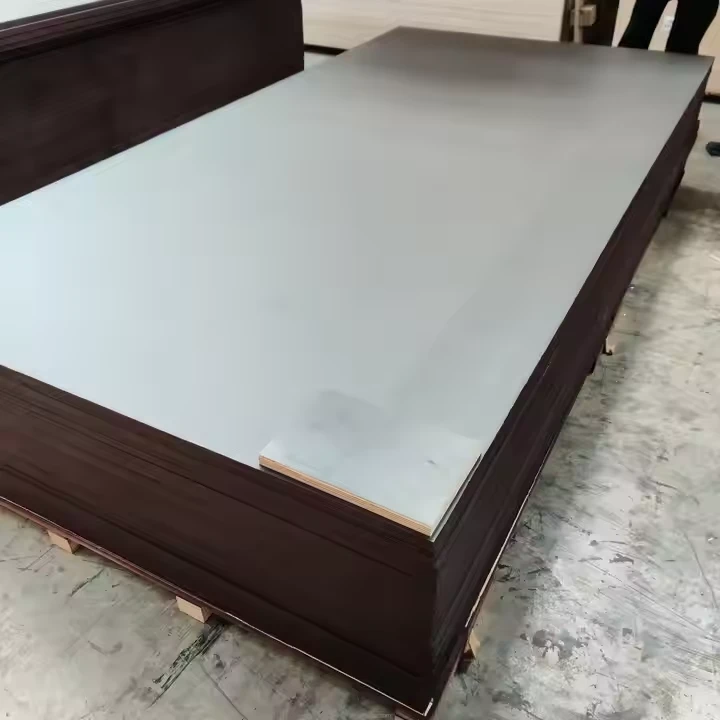
Black Faced Plywood is a type of engineered wood product. It consists of multiple layers of thin wood veneers glued together, with a black - colored facing layer. This facing can be made of various materials, such as resin - impregnated paper or a thin layer of black - stained wood. The plywood is commonly used in construction for formwork, where it provides a smooth and durable surface for concrete pouring, as well as in furniture manufacturing and interior decoration.
Raw Materials and Sourcing
The environmental friendliness of Black Faced Plywood starts with its raw materials. The wood veneers used in the core of the plywood are typically sourced from forests. If the wood comes from sustainably managed forests, it can be a positive step towards environmental conservation. Sustainable forestry practices ensure that trees are replanted at a rate equal to or greater than the rate of harvesting. This helps maintain the ecological balance, provides habitat for wildlife, and contributes to carbon sequestration.

Certifications such as the Forest Stewardship Council (FSC) and the Programme for the Endorsement of Forest Certification (PEFC) are good indicators of sustainable sourcing. FSC - certified wood comes from forests that meet strict environmental, social, and economic standards. When our company sources wood for Black Faced Plywood, we prioritize suppliers with these certifications, ensuring that the raw materials are harvested in an environmentally responsible manner.
Manufacturing Process
The manufacturing process of Black Faced Plywood also plays a crucial role in its environmental impact. One of the main concerns is the use of adhesives. Traditional plywood adhesives may contain formaldehyde, a volatile organic compound (VOC) that can be harmful to human health and the environment. High levels of formaldehyde emissions can contribute to indoor air pollution and have been linked to respiratory problems and other health issues.
However, in recent years, there has been a significant shift towards the use of low - formaldehyde or formaldehyde - free adhesives in the plywood industry. Our company has embraced this trend and uses advanced adhesive technologies that meet strict environmental standards. These adhesives not only reduce formaldehyde emissions but also improve the overall quality and durability of the Black Faced Plywood.
Another aspect of the manufacturing process is energy consumption. Modern plywood manufacturing facilities are increasingly adopting energy - efficient technologies. For example, the use of advanced drying systems and automated production lines can significantly reduce energy consumption compared to traditional manufacturing methods. By optimizing our manufacturing processes, we are able to minimize the carbon footprint associated with the production of Black Faced Plywood.
Product Durability and Reusability
One of the key environmental benefits of Black Faced Plywood is its durability. In construction applications, it can withstand multiple cycles of concrete pouring and stripping without significant damage. This means that a single sheet of Black Faced Plywood can be used for many projects, reducing the need for frequent replacement and thus conserving resources.
Moreover, at the end of its useful life, Black Faced Plywood can often be recycled. The wood veneers can be broken down and used to produce other wood products, such as particleboard or fiberboard. This recycling process helps divert waste from landfills and reduces the demand for virgin wood materials.
Comparing with Other Plywood Types
To better understand the environmental friendliness of Black Faced Plywood, it is useful to compare it with other types of plywood. For example, White Film Faced Plywood and Brown Shuttering Plywood are also commonly used in construction.
White Film Faced Plywood has a white - colored film on its surface, which provides a smooth finish and is often used for high - quality concrete surfaces. Brown Shuttering Plywood, on the other hand, has a brown - colored film and is known for its strength and durability. Similar to Black Faced Plywood, the environmental friendliness of these products depends on factors such as raw material sourcing, adhesive use, and manufacturing processes.
Brown Faced Plywood is another option. It shares many of the same characteristics as Black Faced Plywood in terms of construction and usage. When comparing these different types of plywood, it is important to consider their specific environmental features on a case - by - case basis.
Conclusion
In conclusion, Black Faced Plywood can be an environmentally friendly option when sourced, manufactured, and used responsibly. By using wood from sustainably managed forests, low - formaldehyde adhesives, and energy - efficient manufacturing processes, we can minimize the environmental impact of this product. Its durability and reusability also contribute to resource conservation.
As a supplier of Black Faced Plywood, we are committed to providing our customers with high - quality, environmentally friendly products. We believe that by making informed choices about the materials we use in construction and woodworking, we can contribute to a more sustainable future.
If you are interested in learning more about our Black Faced Plywood or are considering a purchase for your next project, we invite you to contact us for further discussion and negotiation. We are ready to provide you with detailed product information and competitive pricing.
References
- Forest Stewardship Council. (n.d.). What is FSC? Retrieved from [FSC official website].
- Programme for the Endorsement of Forest Certification. (n.d.). About PEFC. Retrieved from [PEFC official website].
- Various industry reports on plywood manufacturing and environmental standards.