

As a supplier of Black Phenolic Plywood, I often encounter inquiries from customers regarding its durability, particularly the question of whether it cracks easily. In this blog post, I aim to provide a comprehensive and scientific analysis of this issue, drawing on industry knowledge and practical experience.
Understanding Black Phenolic Plywood
Black Phenolic Plywood is a type of construction material widely used in various applications, including formwork for concrete casting, packaging, and furniture manufacturing. It is made by bonding multiple layers of wood veneers together with phenolic resin, which is then impregnated with a black phenolic film. This film not only gives the plywood its distinctive black color but also provides enhanced resistance to water, chemicals, and abrasion.
Factors Affecting Cracking in Black Phenolic Plywood
The susceptibility of Black Phenolic Plywood to cracking is influenced by several factors, including the quality of the raw materials, the manufacturing process, and the environmental conditions in which it is used.
Quality of Raw Materials
The quality of the wood veneers used in the production of Black Phenolic Plywood plays a crucial role in determining its resistance to cracking. High-quality veneers with a uniform grain structure and minimal defects are less likely to crack than those with irregular grain patterns or knots. Additionally, the moisture content of the veneers should be carefully controlled during the manufacturing process to prevent excessive shrinkage or expansion, which can lead to cracking.
Manufacturing Process
The manufacturing process of Black Phenolic Plywood also has a significant impact on its durability. Proper bonding between the veneers and the phenolic resin is essential to ensure the structural integrity of the plywood. If the bonding is weak or uneven, the plywood may be more prone to cracking under stress. Moreover, the pressing and curing conditions during the manufacturing process must be carefully controlled to achieve the desired density and strength of the plywood.
Environmental Conditions
The environmental conditions in which Black Phenolic Plywood is used can also affect its susceptibility to cracking. Exposure to extreme temperatures, humidity, and sunlight can cause the plywood to expand or contract, leading to internal stresses that may result in cracking. Additionally, mechanical stress, such as bending or impact, can also cause the plywood to crack if it exceeds the material's strength limit.
Preventive Measures to Minimize Cracking
To minimize the risk of cracking in Black Phenolic Plywood, several preventive measures can be taken during the manufacturing, storage, and use of the material.
Quality Control during Manufacturing
As a supplier, we implement strict quality control measures during the manufacturing process to ensure the high quality of our Black Phenolic Plywood. We carefully select the raw materials, control the moisture content of the veneers, and use advanced bonding techniques to ensure strong and uniform bonding between the veneers and the phenolic resin. Additionally, we conduct rigorous testing on the finished products to ensure that they meet the required standards for strength, durability, and resistance to cracking.
Proper Storage and Handling
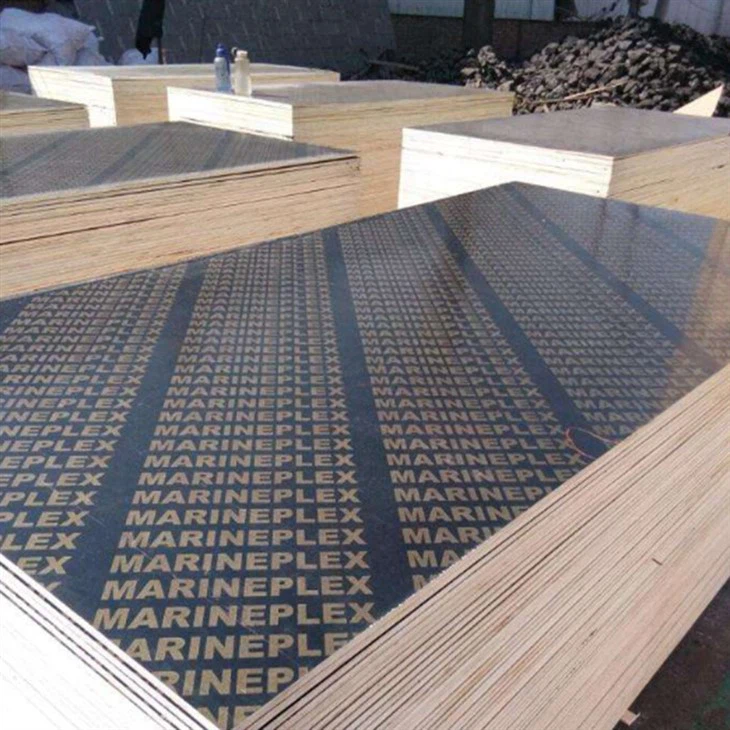
Proper storage and handling of Black Phenolic Plywood are also essential to prevent cracking. The plywood should be stored in a dry, well-ventilated area away from direct sunlight and extreme temperatures. It should be stacked flat and supported evenly to prevent warping or bending. During transportation, the plywood should be protected from damage and secured to prevent shifting or movement.

Appropriate Use and Installation
When using Black Phenolic Plywood, it is important to follow the manufacturer's recommendations for use and installation. The plywood should be installed in a manner that allows for proper expansion and contraction, and it should not be subjected to excessive stress or load. Additionally, appropriate fasteners and adhesives should be used to ensure a secure and stable installation.
Comparison with Other Types of Plywood
To provide a better understanding of the durability of Black Phenolic Plywood, it is useful to compare it with other types of plywood commonly used in construction.
Pine Film Faced Plywood
Pine Film Faced Plywood is another popular type of construction plywood. It is made from pine veneers and is typically coated with a film to provide protection against water and abrasion. While Pine Film Faced Plywood is generally less expensive than Black Phenolic Plywood, it may be more prone to cracking due to the lower density and strength of pine wood compared to other hardwoods.
Black Film Plywood
Black Film Plywood is similar to Black Phenolic Plywood in appearance, but it may have different properties depending on the type of resin and film used. Some Black Film Plywood may be less durable and more prone to cracking than Black Phenolic Plywood, especially if it is not manufactured to the same high standards.
Birch Faced Poplar Plywood
Birch Faced Poplar Plywood is a combination of birch veneers on the face and poplar veneers in the core. It offers a good balance of strength, durability, and cost. While it may be less resistant to cracking than Black Phenolic Plywood, it is still a popular choice for many construction applications.
Conclusion
In conclusion, Black Phenolic Plywood is a durable and reliable construction material that is resistant to cracking when properly manufactured, stored, and used. The susceptibility of the plywood to cracking is influenced by several factors, including the quality of the raw materials, the manufacturing process, and the environmental conditions. By implementing strict quality control measures, following proper storage and handling procedures, and using the plywood in accordance with the manufacturer's recommendations, the risk of cracking can be minimized.
As a supplier of Black Phenolic Plywood, we are committed to providing our customers with high-quality products and excellent service. If you have any questions or need further information about our Black Phenolic Plywood, please do not hesitate to contact us. We look forward to discussing your specific requirements and helping you find the best solution for your construction projects.
References
- Forest Products Laboratory. (2010). Wood Handbook: Wood as an Engineering Material. Madison, WI: U.S. Department of Agriculture, Forest Service.
- ASTM International. (2021). Standard Specification for Structural Plywood. West Conshohocken, PA: ASTM International.
- Bock, J. (2018). Plywood: A Comprehensive Guide to Selection, Installation, and Finishing. Newtown, CT: Taunton Press.