

Hey there! I'm a plywood supplier, and today I wanna talk about something that often comes up in my line of work: how thick is standard plywood? It's a question I get asked a lot, and it's super important to know if you're in the market for plywood for your projects.
First off, let's understand what plywood is. Plywood is made by gluing together thin layers of wood veneer, with each layer's grain direction usually perpendicular to the adjacent one. This cross - grain construction gives plywood its strength and stability.
Now, when it comes to standard plywood thicknesses, there are quite a few options out there. In the market, you'll commonly find plywood in thicknesses ranging from really thin stuff to some pretty thick boards.
One of the thinnest standard plywood options is around 1/8 inch (about 3.2 mm). This thin plywood is great for stuff like making model airplanes, small crafts, or as a backing for cabinets where you don't need a lot of strength. It's lightweight and easy to cut and shape, but it's not going to hold up well under heavy loads.
Moving up a bit, 1/4 inch (about 6.4 mm) plywood is also quite popular. It's often used for interior wall paneling, drawer bottoms, and some lightweight furniture construction. It's a bit more substantial than the 1/8 - inch stuff, but still not the thickest option.
If you need something a bit sturdier, 3/8 inch (about 9.5 mm) plywood is a good choice. It can be used for things like subflooring in small areas, or for making the sides of small boxes and crates. It has more strength than the thinner options and can handle a bit more weight.
A very common thickness is 1/2 inch (about 12.7 mm). This is a workhorse in the plywood world. It's used for a wide range of applications, from building cabinets, bookshelves, and even some parts of a house's structure. You can use it for wall sheathing, floor underlayment, and many DIY projects around the home.
For heavier - duty applications, 5/8 inch (about 15.9 mm) and 3/4 inch (about 19.1 mm) plywood are often the go - to choices. 5/8 - inch plywood is great for subflooring in areas where there will be a lot of foot traffic, like in a living room or hallway. 3/4 - inch plywood is even stronger and is commonly used for building the frames of large furniture, heavy - duty cabinets, and as structural sheathing in construction.
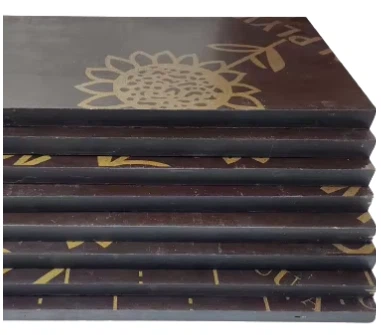

But what if you need something even thicker? Well, there are thicker options available too. For example, 1 - inch (about 25.4 mm) and 1 - 1/4 inch (about 31.8 mm) plywood can be used for really heavy - duty projects, like building large industrial crates or for some specialized construction work.
Now, I know you might be thinking, "Okay, but what about waterproof plywood?" That's a great question. Waterproof plywood is designed to resist moisture and is perfect for outdoor projects. You can check out Waterproof Plywood for Outdoor on our website to see our range of waterproof options.
If you specifically need a thick waterproof plywood, our 30mm Waterproof Plywood is a top - notch choice. It's thick enough to handle heavy loads and is protected against water damage, making it ideal for outdoor decks, boat building, and other wet - environment projects.
Another type of plywood that's worth mentioning is Aspenite Plywood. It has its own unique properties and can be used in a variety of applications, depending on its thickness.
When you're choosing the right thickness of plywood for your project, there are a few things to consider. First, think about the load it will need to bear. If you're making a bookshelf, you'll need a thicker plywood to support the weight of the books. Second, consider the location. If it's an outdoor project, you'll want to choose a waterproof option. And finally, think about your budget. Thicker plywood usually costs more, so you'll need to balance your needs with what you can afford.
As a plywood supplier, I've seen all sorts of projects come to life with the right plywood thickness. Whether you're a professional builder or a DIY enthusiast, getting the thickness right is crucial for the success of your project.
If you're interested in purchasing plywood for your next project, don't hesitate to reach out. I'm here to help you choose the right thickness and type of plywood for your specific needs. Whether you need a small amount for a home project or a large quantity for a commercial job, I've got you covered. Just let me know what you're working on, and we can have a chat about the best options for you.
In conclusion, standard plywood comes in a wide range of thicknesses, from as thin as 1/8 inch to over an inch thick. Each thickness has its own uses and benefits, and by understanding your project requirements, you can make an informed decision. So, get out there, start your project, and let the right plywood thickness make it a success!
References
- Wood Handbook: Wood as an Engineering Material, Forest Products Laboratory, United States Department of Agriculture.
- Plywood Manufacturing and Applications, various industry publications.