

As a supplier of Bamboo Plywood 4x8, I often get asked about the coefficient of friction of this particular product. The coefficient of friction is a crucial parameter, especially in applications where slip resistance is a concern, such as flooring or in some industrial settings. In this blog, I'll delve into what the coefficient of friction of Bamboo Plywood 4x8 is, the factors that influence it, and its significance in various applications.
Understanding the Coefficient of Friction
The coefficient of friction is a dimensionless number that represents the ratio of the force of friction between two surfaces to the normal force pressing the two surfaces together. It is denoted by the Greek letter μ (mu). There are two types of coefficients of friction: static and kinetic. The static coefficient of friction (μs) is the force required to start an object moving across a surface, while the kinetic coefficient of friction (μk) is the force required to keep an object moving at a constant speed.
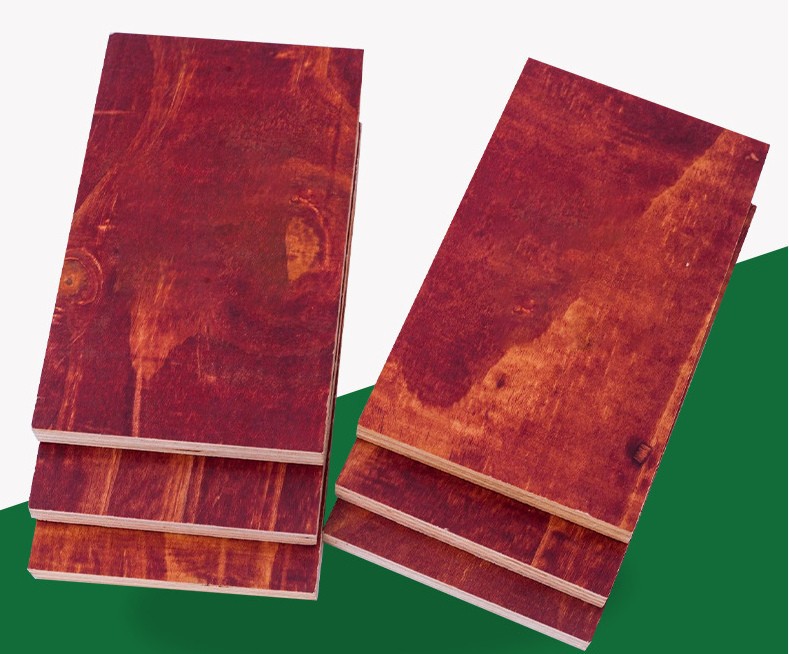
For Bamboo Plywood 4x8, the coefficient of friction can vary depending on several factors. One of the primary factors is the surface finish of the plywood. A smooth finish will generally have a lower coefficient of friction compared to a textured or rough finish. This is because a smooth surface offers less resistance to the movement of an object across it.
Factors Affecting the Coefficient of Friction of Bamboo Plywood 4x8
Surface Finish
As mentioned earlier, the surface finish plays a significant role in determining the coefficient of friction. A polished or sanded surface will have a lower μ value, making it more slippery. On the other hand, a surface with a brushed or embossed texture will increase the coefficient of friction, providing better grip. For example, if the Bamboo Plywood 4x8 is intended for use as flooring in a high - traffic area, a textured finish can reduce the risk of slips and falls.
Moisture Content
Moisture can also have a substantial impact on the coefficient of friction. When the bamboo plywood is wet, the coefficient of friction decreases significantly. Water acts as a lubricant between the two surfaces, reducing the frictional force. This is why it's important to ensure proper ventilation and moisture control in areas where Bamboo Plywood 4x8 is installed. For instance, in a bathroom or a kitchen, where there is a high likelihood of water spills, the plywood should be treated with a moisture - resistant coating to maintain an acceptable coefficient of friction.

Contaminants
The presence of contaminants on the surface of the bamboo plywood can alter the coefficient of friction. Dust, dirt, oil, or grease can all reduce the frictional force. Regular cleaning and maintenance are essential to keep the surface clean and maintain the desired coefficient of friction. For industrial applications, where there may be a higher risk of contamination, appropriate cleaning protocols should be established.
Measuring the Coefficient of Friction of Bamboo Plywood 4x8
There are several methods to measure the coefficient of friction. One common method is the inclined plane method. In this method, a sample of the Bamboo Plywood 4x8 is placed on an inclined plane, and an object is placed on the plywood. The angle of the inclined plane is gradually increased until the object starts to slide. The tangent of this angle is equal to the static coefficient of friction.
Another method is the use of a tribometer. A tribometer is a device that measures the frictional force between two surfaces. It can provide more accurate and consistent results compared to the inclined plane method. The tribometer can be used to measure both the static and kinetic coefficients of friction under different conditions, such as varying loads and speeds.
Significance of the Coefficient of Friction in Different Applications
Flooring
In flooring applications, the coefficient of friction is of utmost importance. A high coefficient of friction is essential to prevent slips and falls, especially in areas where people walk, such as homes, offices, and public buildings. Bamboo Plywood 4x8 with a suitable coefficient of friction can provide a safe and comfortable walking surface. For example, in a commercial kitchen, where there is a high risk of water and grease spills, a bamboo plywood floor with a high coefficient of friction can reduce the likelihood of workplace accidents.
Industrial Applications
In industrial settings, the coefficient of friction can affect the performance of machinery and equipment. For example, if Bamboo Plywood 4x8 is used as a workbench surface, a high coefficient of friction can prevent objects from sliding off the surface during operation. On the other hand, in some conveyor systems, a lower coefficient of friction may be required to allow for smooth movement of materials.
Furniture
In furniture manufacturing, the coefficient of friction can influence the usability and safety of the,product. For example, a bamboo plywood tabletop with a suitable coefficient of friction can prevent objects from easily sliding off the surface. This is particularly important for tables in restaurants or cafes, where plates, glasses, and other items need to stay in place.
Comparison with Other Types of Plywood
When compared to other types of plywood, such as 12mm Construction Plywood and 18 Inch Pressure Treated Plywood, Bamboo Plywood 4x8 generally has a similar coefficient of friction range. However, the specific value can vary depending on the manufacturing process and the surface finish. For example, pressure - treated plywood may have a different surface chemistry due to the treatment process, which can affect the coefficient of friction.
Fire Resistance and the Coefficient of Friction
The fire resistance of plywood is another important aspect to consider. Plywood Fire Resistance can be related to the coefficient of friction in some cases. Fire - resistant treatments may alter the surface properties of the plywood, which can in turn affect the coefficient of friction. For example, a fire - resistant coating may change the texture or smoothness of the surface, leading to a change in the μ value.
Conclusion
In conclusion, the coefficient of friction of Bamboo Plywood 4x8 is a complex parameter that is influenced by several factors, including surface finish, moisture content, and contaminants. Understanding the coefficient of friction is crucial for ensuring the safety and performance of the plywood in various applications, such as flooring, industrial use, and furniture manufacturing.
If you are in the market for Bamboo Plywood 4x8 and have questions about the coefficient of friction or other product specifications, I encourage you to reach out for a detailed discussion. Whether you need plywood for a small home project or a large - scale industrial application, we can provide you with high - quality products that meet your specific requirements. Contact us to start the procurement process and let's find the perfect Bamboo Plywood 4x8 solution for you,.
References
- ASTM International. (20XX). Standard test methods for measuring floor slipperiness.
- Callister, W. D., & Rethwisch, D. G. (2011). Materials science and engineering: An introduction. Wiley.
- Panshin, A. J., & de Zeeuw, C. (1980). Textbook of wood technology. McGraw - Hill.