

Hey there! As a supplier of Pine LVL Beam, I often get asked about what kind of fasteners should be used with it. Well, let's dive right into this topic and figure out the best options for you.
First off, let's understand what Pine LVL Beam is. Pine LVL (Laminated Veneer Lumber) Beam is a high - performance engineered wood product. It's made by bonding multiple layers of thin pine veneers together with adhesives, which gives it great strength and stability. You can check out more about it on our website Pine LVL Beam.
Now, when it comes to choosing fasteners for Pine LVL Beam, there are several factors to consider. The most important ones are the load - bearing capacity, the environment where the beam will be used, and the type of connection you need.
Nails
Nails are a common and cost - effective option for fastening Pine LVL Beam. They are easy to use, and you can drive them in with a hammer or a nail gun. For light - duty applications, like framing small structures or attaching non - load - bearing elements, common nails can work just fine. However, for more heavy - duty applications, you might want to use ring - shank nails.
Ring - shank nails have ridges around the shank, which provide better holding power. They are less likely to pull out compared to smooth - shank nails. When you're nailing Pine LVL Beam, make sure to follow the recommended nail sizes and spacing. Usually, the manufacturer's guidelines will tell you how many nails you need per connection and what size they should be. For example, for a standard connection in a residential construction, you might use 16d common nails or 10d ring - shank nails.
Screws
Screws are another great choice for fastening Pine LVL Beam. They offer even better holding power than nails, especially in situations where there is a lot of vibration or movement. Wood screws are commonly used, and they come in different lengths and diameters.
When using screws, it's important to pre - drill holes to prevent the wood from splitting. The size of the pre - drilled hole should be slightly smaller than the diameter of the screw. For Pine LVL Beam, you can use deck screws or lag screws depending on the application. Deck screws are great for attaching beams to other wooden components, like joists or rafters. Lag screws, on the other hand, are used for more heavy - duty connections, such as attaching a beam to a concrete foundation or a steel bracket.
Bolts
Bolts are the go - to fasteners for heavy - load applications. They provide the highest level of strength and stability. When you're using bolts with Pine LVL Beam, you'll need to drill holes through the beam and the connected members. Then, you insert the bolt and secure it with a nut and a washer.
There are different types of bolts, such as carriage bolts, hex bolts, and lag bolts. Carriage bolts have a smooth, domed head that is designed to be countersunk into the wood, which gives a clean look. Hex bolts have a hexagonal head and are tightened with a wrench. Lag bolts are similar to lag screws but are larger and stronger.
For Pine LVL Beam, the size of the bolt depends on the load it needs to carry. You also need to make sure that the bolt is long enough to go through all the connected members and have enough threads for the nut to grip properly.
Environment Considerations
The environment where the Pine LVL Beam will be used also plays a big role in choosing the right fasteners. If the beam is going to be exposed to moisture, like in a basement or an outdoor structure, you need to use corrosion - resistant fasteners. Stainless steel or hot - dipped galvanized fasteners are good options in these cases. They won't rust or corrode easily, which ensures the long - term integrity of the connection.
On the other hand, if the beam is used in a dry, indoor environment, regular steel fasteners can work just fine. But even in dry conditions, it's still a good idea to use fasteners that are treated to resist decay and insects.
Connection Types
The type of connection you need also affects the choice of fasteners. For example, if you're making a butt joint, where two beams are joined end - to - end, you might use bolts or screws along with a metal plate or a splice. The metal plate or splice helps to distribute the load evenly across the connection.
If you're making a lap joint, where one beam overlaps another, nails or screws can be used to hold the two beams together. You can also use metal brackets or angle irons to reinforce the joint.
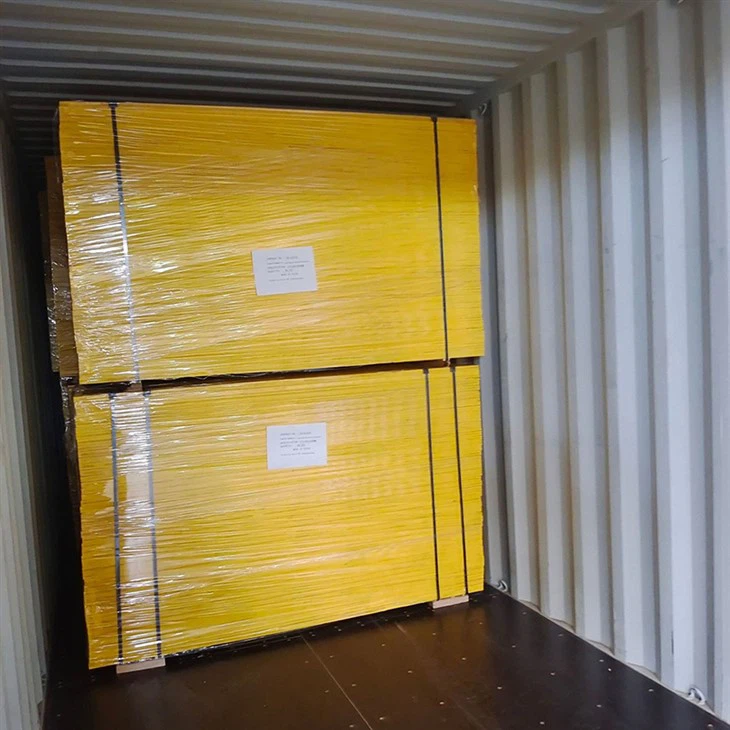
Let's talk about some other related products that you might use in conjunction with Pine LVL Beam. H20 Timber Beam is a popular choice for formwork in construction. It can be used along with Pine LVL Beam to create a strong and stable support system. And if you're doing concrete formwork, 3 Ply Yellow Shuttering Panel is a great option. These panels are durable and can be easily attached to the beams using the right fasteners.
In conclusion, choosing the right fasteners for Pine LVL Beam is crucial for the safety and durability of your structure. Whether you're a DIY enthusiast building a small shed or a professional contractor working on a large - scale construction project, understanding the different types of fasteners and their applications is essential.
If you're interested in purchasing Pine LVL Beam or have questions about the right fasteners for your project, don't hesitate to reach out. We're here to help you make the best choices for your construction needs.

References
- "Wood Construction Manual", American Wood Council
- Manufacturer's guidelines for Pine LVL Beam products