

In the realm of construction and building materials, H20 Timber Beams have emerged as a reliable and versatile option. As a dedicated H20 Timber Beam supplier, I am often asked about the creep behavior of these beams. Creep, in the context of materials science, refers to the time-dependent deformation that occurs under a constant load. Understanding the creep behavior of H20 Timber Beams is crucial for ensuring the long-term structural integrity and performance of any construction project where they are employed.
What is H20 Timber Beam?
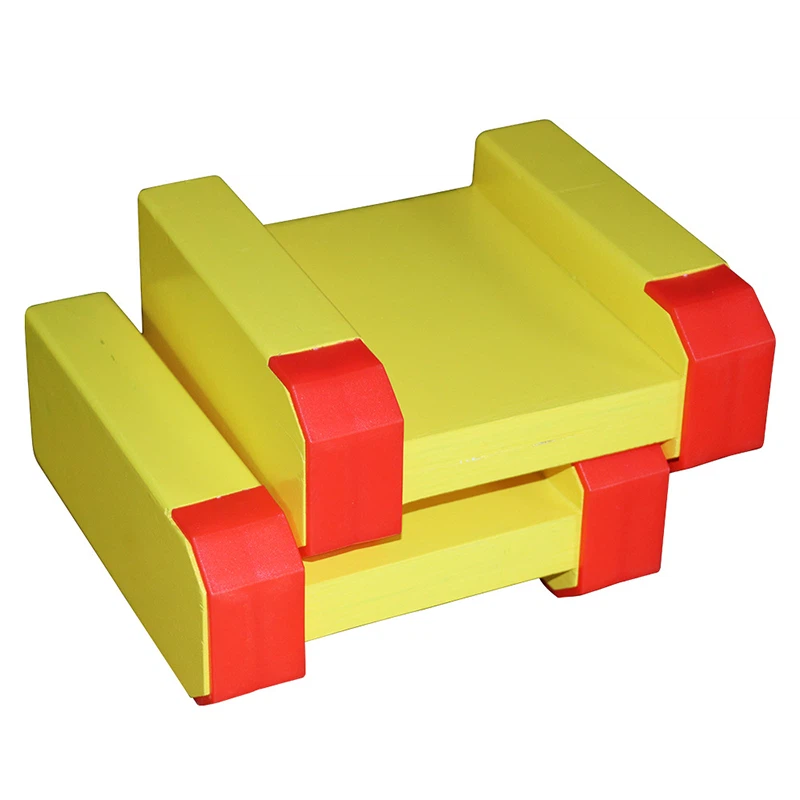
Before delving into the creep behavior, let's briefly introduce what H20 Timber Beams are. H20 Timber Beams are engineered wooden beams with a distinct H-shaped cross-section. They are typically made from high-quality timber, such as pine or spruce, and are designed to provide excellent strength and load-bearing capacity. These beams are widely used in formwork systems for concrete construction, as well as in various other structural applications due to their light weight, ease of handling, and cost-effectiveness. You can learn more about H20 Timber Beam on our website.
Factors Influencing Creep in H20 Timber Beams
Several factors can influence the creep behavior of H20 Timber Beams. One of the primary factors is the moisture content of the timber. Wood is a hygroscopic material, which means it can absorb and release moisture depending on the surrounding environmental conditions. When the moisture content of the timber changes, it can cause dimensional changes and affect the mechanical properties of the beam, including its creep behavior. Higher moisture content generally leads to increased creep, as the water molecules can act as a plasticizer, reducing the internal friction between the wood fibers and allowing them to slide more easily under load.
Another important factor is the magnitude and duration of the applied load. The greater the load and the longer it is applied, the more significant the creep deformation will be. Creep is a time-dependent process, and the deformation accumulates over time. Therefore, in long-term applications where H20 Timber Beams are subjected to continuous or repeated loads, the creep effect needs to be carefully considered.
The temperature also plays a role in the creep behavior of H20 Timber Beams. Higher temperatures can accelerate the creep process, as they increase the mobility of the wood molecules and reduce the stiffness of the timber. Additionally, the type of loading, whether it is static or dynamic, can also affect the creep characteristics. Dynamic loads, such as those caused by vibrations or impact, can induce additional stress and strain in the beam, potentially increasing the creep deformation.
Testing and Evaluation of Creep in H20 Timber Beams
To accurately assess the creep behavior of H20 Timber Beams, various testing methods are available. One common method is the long-term creep test, where the beams are subjected to a constant load for an extended period, typically several months or even years. During the test, the deformation of the beams is measured at regular intervals, and the data is analyzed to determine the creep coefficient and other relevant parameters.
Another approach is the use of accelerated creep testing techniques. These methods involve subjecting the beams to higher loads and/or elevated temperatures to simulate long-term loading conditions in a shorter time frame. While accelerated tests can provide valuable information about the relative creep behavior of different materials or beam designs, it is important to note that the results may not fully represent the actual long-term performance in real-world applications.
In addition to experimental testing, numerical modeling can also be used to predict the creep behavior of H20 Timber Beams. Finite element analysis (FEA) is a powerful tool that can simulate the mechanical response of the beams under different loading and environmental conditions. By incorporating material models that account for the time-dependent behavior of wood, FEA can provide detailed insights into the creep deformation and stress distribution within the beams.
Implications for Construction Projects
The creep behavior of H20 Timber Beams has significant implications for construction projects. In formwork applications, for example, the creep deformation of the beams can affect the accuracy and stability of the concrete formwork. Excessive creep can lead to sagging or deflection of the formwork, which can result in uneven concrete surfaces and potential quality issues. Therefore, it is essential to select H20 Timber Beams with appropriate creep characteristics and to design the formwork system to account for the expected creep deformation.
In structural applications, such as floor or roof beams, the long-term creep of H20 Timber Beams can affect the overall structural integrity and serviceability of the building. Over time, the accumulated creep deformation can cause excessive deflection, which may lead to cracking of the ceiling or other finishing materials, as well as discomfort for the occupants. To mitigate these risks, engineers need to consider the creep effect in the structural design and specify appropriate safety factors.
Mitigation Strategies
To minimize the impact of creep on H20 Timber Beams, several mitigation strategies can be employed. One approach is to control the moisture content of the timber during production and installation. This can be achieved by storing the beams in a controlled environment, ensuring proper ventilation, and using moisture-resistant coatings or treatments. By maintaining a relatively stable moisture content, the dimensional stability of the beams can be improved, and the creep deformation can be reduced.
Another strategy is to use pre-stressed or reinforced H20 Timber Beams. Pre-stressing involves applying an initial compressive force to the beam before it is subjected to the service load. This can counteract the tensile stresses induced by the load and reduce the overall creep deformation. Reinforcing the beams with materials such as steel or carbon fiber can also enhance their stiffness and strength, thereby reducing the susceptibility to creep.
Proper design and installation practices are also crucial for minimizing creep effects. This includes ensuring adequate support and bracing for the beams, avoiding overloading, and providing sufficient clearance for thermal expansion and contraction. Additionally, regular inspection and maintenance of the structure can help detect any signs of excessive creep or other structural issues early on, allowing for timely corrective action.
Other Related Timber Products
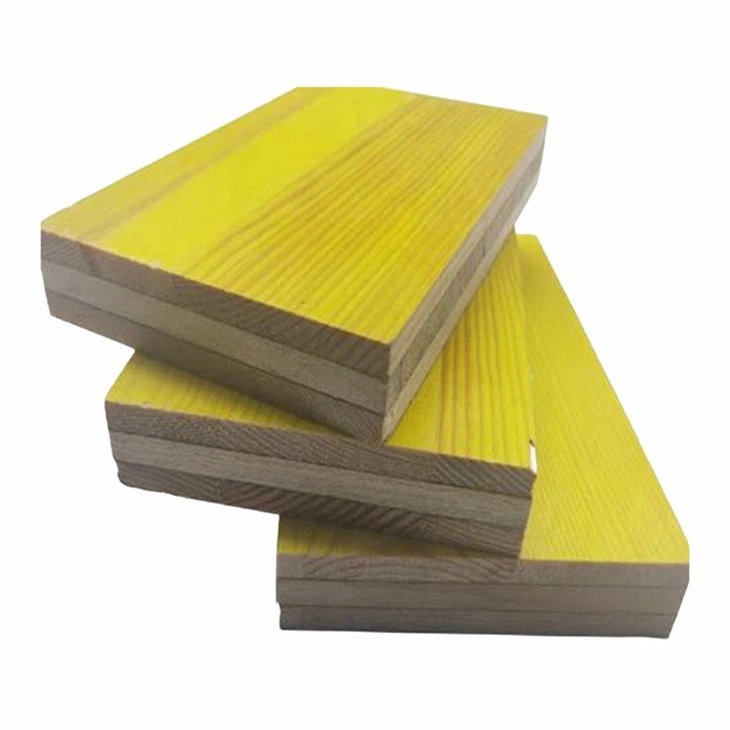
In addition to H20 Timber Beams, we also offer a range of other high-quality timber products, such as 3 Ply Yellow Shuttering Panel and Pine LVL Beam. These products are also widely used in the construction industry and can complement the use of H20 Timber Beams in various applications. The 3 Ply Yellow Shuttering Panel is a durable and cost-effective option for concrete formwork, while the Pine LVL Beam offers enhanced strength and stability for structural applications.
Conclusion
In conclusion, the creep behavior of H20 Timber Beams is a complex phenomenon that is influenced by various factors, including moisture content, load magnitude and duration, temperature, and loading type. Understanding the creep characteristics of these beams is essential for ensuring the long-term performance and safety of construction projects. By carefully considering the factors that affect creep, conducting appropriate testing and evaluation, and implementing effective mitigation strategies, the impact of creep can be minimized, and the structural integrity of the building can be maintained.
If you are interested in learning more about our H20 Timber Beams or other timber products, or if you have any questions regarding the creep behavior or other aspects of these materials, please feel free to contact us. We are always ready to provide you with the professional advice and high-quality products you need for your construction projects.
References
- Bodig, J., & Jayne, B. A. (1982). Mechanics of wood and wood composites. Van Nostrand Reinhold.
- Gibson, L. J., & Ashby, M. F. (1997). Cellular solids: Structure and properties. Cambridge University Press.
- Suddell, B. C., & Evans, H. (2005). Timber engineering: A guide to design principles and structural applications. Blackwell Publishing.